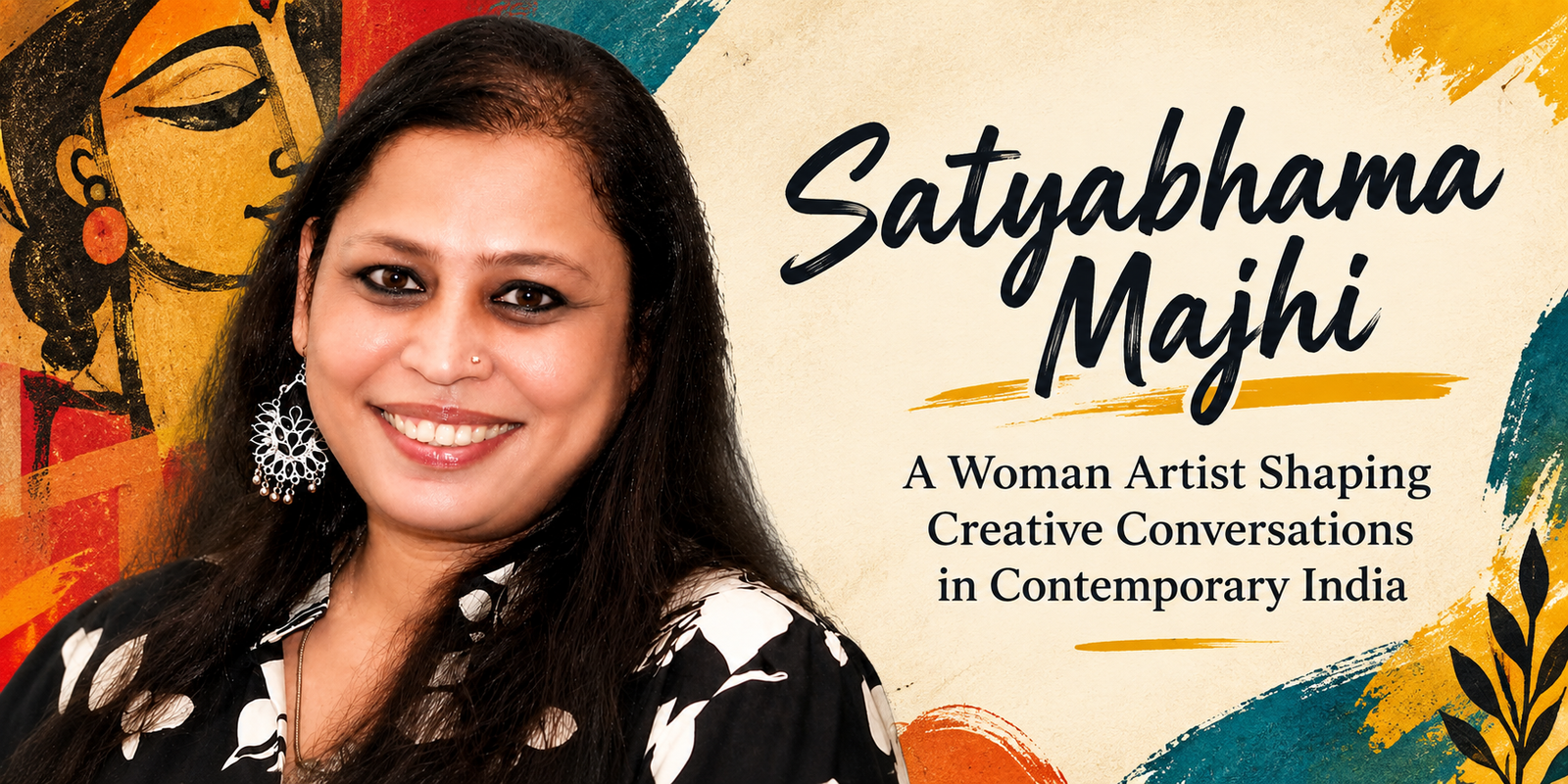
Cultural memory is not preserved only in books, monuments or museums. It can also survive through everyday practices, landscapes, traditional knowledge, visual symbols and the stories people carry from one generation to another. For contemporary Indian artist Satyabhama Majhi, cultural memory has become an important area of artistic exploration.
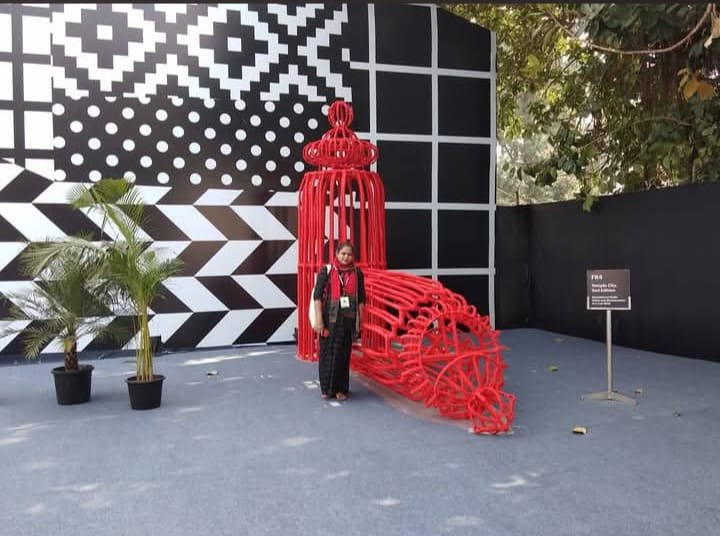
Based in Bhubaneswar, Odisha, Majhi has developed a diverse artistic practice encompassing painting, sculpture, installation, photography, mixed media, public art and community-based projects. Across these different forms, she has examined relationships between people and places, traditional knowledge and contemporary life, nature and society, and memory and modernization.
Her work provides a perspective on how cultural experiences can continue to influence contemporary artistic expression even as communities and environments undergo rapid change.
Understanding Cultural Memory Through Art
Cultural memory refers to the ways communities remember and transmit their experiences, values and traditions. It can exist in rituals, visual patterns, stories, landscapes, occupations, materials and everyday customs.
For an artist, these elements can become sources of creative research.
Majhi’s interest in cultural memory is closely connected with her observation of communities and environments. Her artistic practice does not treat memory simply as a recollection of the past. Instead, memory becomes something that continues to interact with the present.
A traditional visual form, for example, can acquire a new meaning when it is incorporated into contemporary art. A familiar landscape can become a symbol of identity. A natural material can carry associations with a particular place and its cultural history.
Through these transformations, memory becomes part of contemporary visual language.
Odisha as a Cultural Landscape
Odisha provides an important foundation for Majhi’s artistic perspective.
The state has a rich history of visual traditions, crafts, indigenous cultures, festivals, landscapes and community practices. For an artist based in Bhubaneswar, these cultural influences exist alongside the realities of a rapidly developing contemporary city.
This creates a productive tension between continuity and change.
Majhi’s work engages with both sides of this experience. Her interest in urban life reflects the transformation of contemporary Odisha, while her engagement with traditional and indigenous knowledge connects her practice with older cultural systems.
The two perspectives are not necessarily opposites. Together, they reveal how cultural identity can evolve while retaining connections with the past.
Memory and the Changing City
Bhubaneswar has undergone significant urban development, and the changing city has been an important subject within Majhi’s artistic interests.
Urban transformation affects more than buildings and roads. It can change how people experience neighbourhoods, public spaces and familiar surroundings.
A place that once carried personal or community memories may gradually take on a different appearance.
Artists can play an important role in documenting and interpreting such changes.
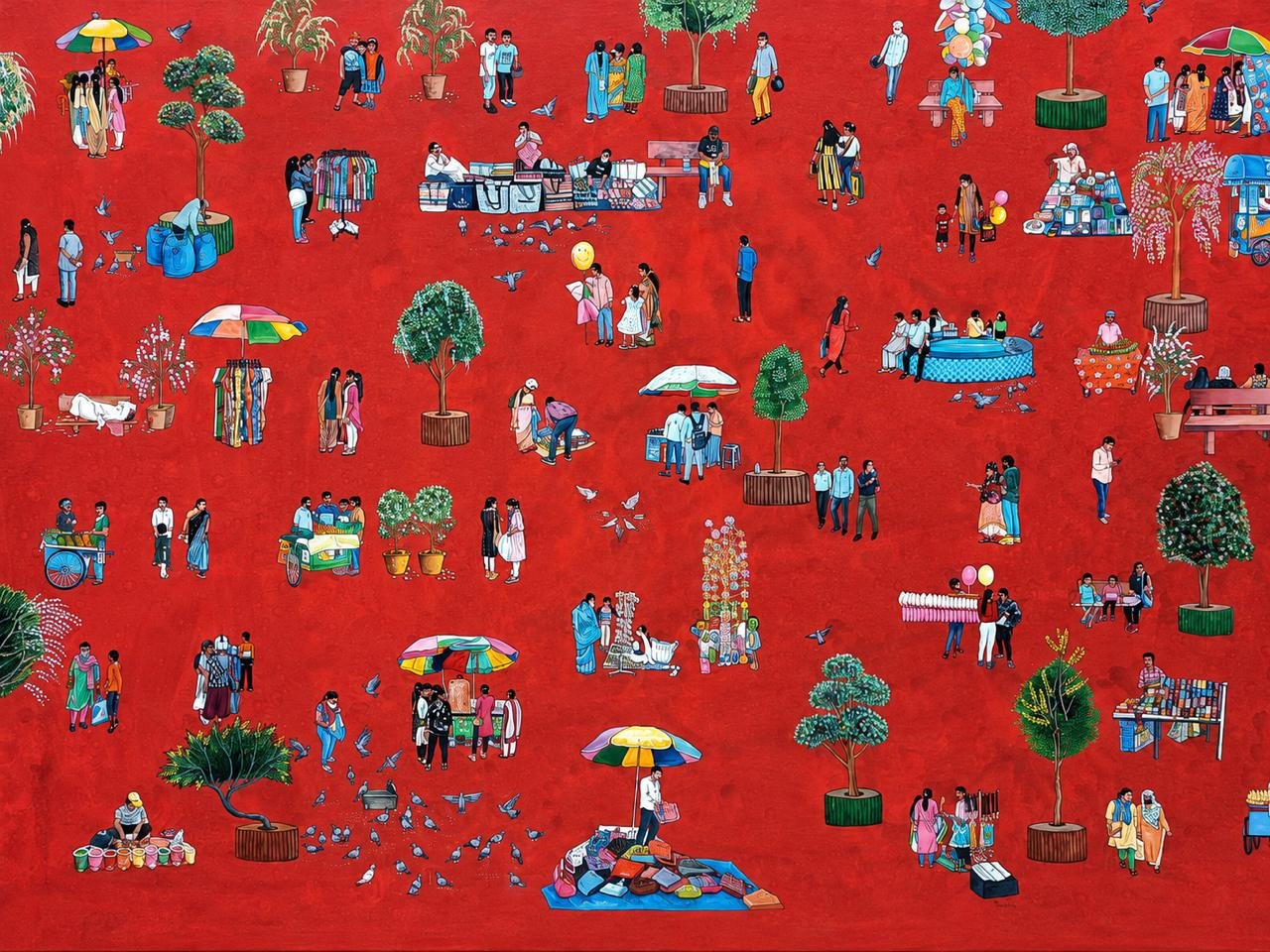
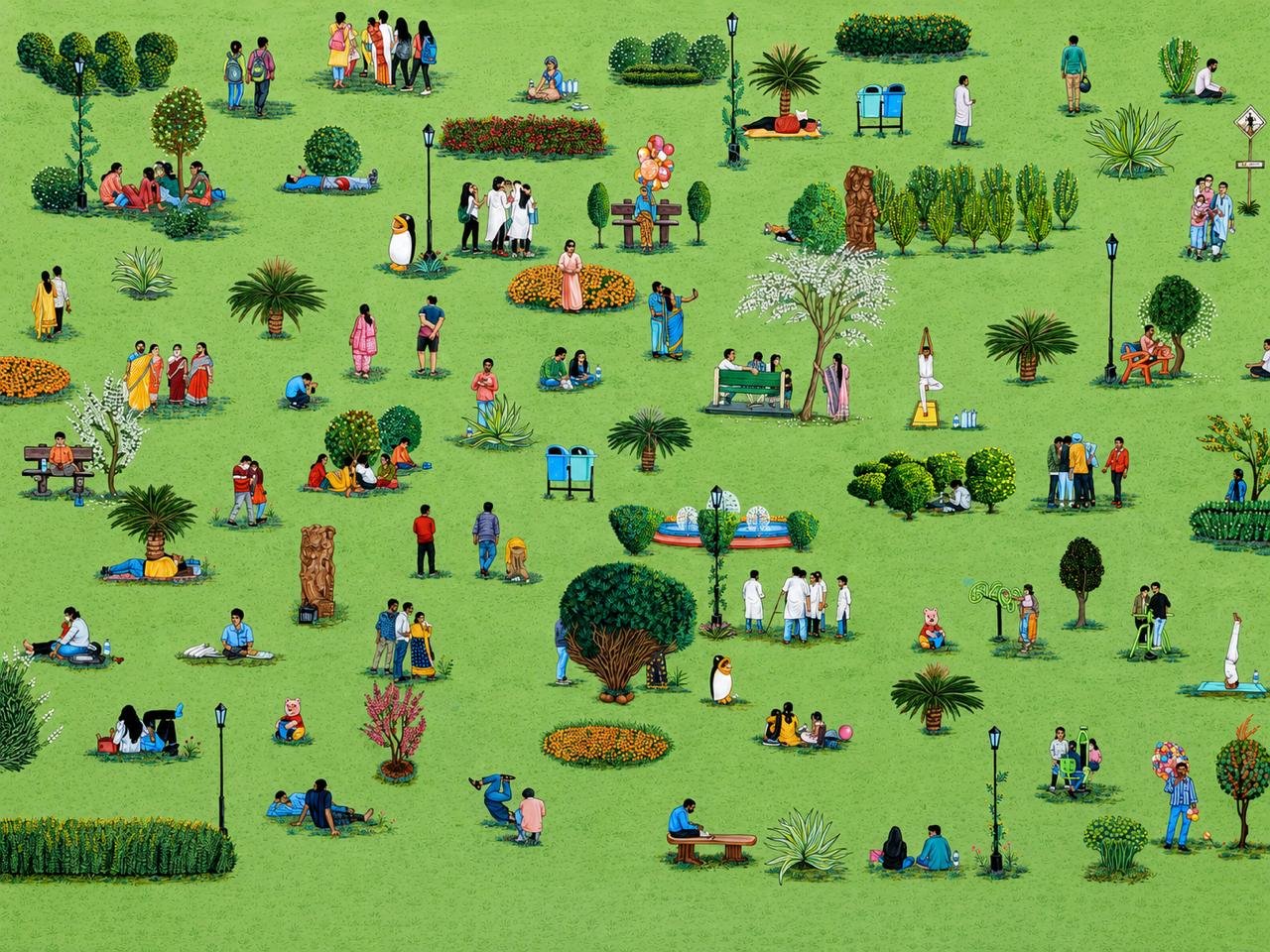
Majhi’s interest in urban life allows her to consider what happens to memory when environments are transformed. Her paintings and public-art activities can become visual reflections on people, places and the changing character of everyday life.
Niyamgiri and Living Memory
Her engagement with the Niyamgiri region offers another perspective on cultural memory.
Majhi has maintained long-term engagement with the Dongaria Kondh community, observing cultural practices, livelihood patterns, indigenous visual traditions and relationships with the natural environment.
In this context, memory is closely connected with land.
Knowledge about the environment, traditional practices and community life can be passed through generations. The landscape itself can become part of cultural memory.
For indigenous communities, a mountain or forest may carry meanings that extend beyond geography. It can be associated with spirituality, livelihood, identity and collective experience.
Majhi’s artistic engagement with Niyamgiri reflects an interest in these deeper relationships.
The Landscape as a Memory Carrier
Landscape is one of the most powerful carriers of cultural memory.
People often associate particular places with personal experiences, family histories and community traditions. A road, hill, river or field can therefore hold meanings that are not immediately visible.
Majhi’s work explores this relationship between physical environment and human memory.
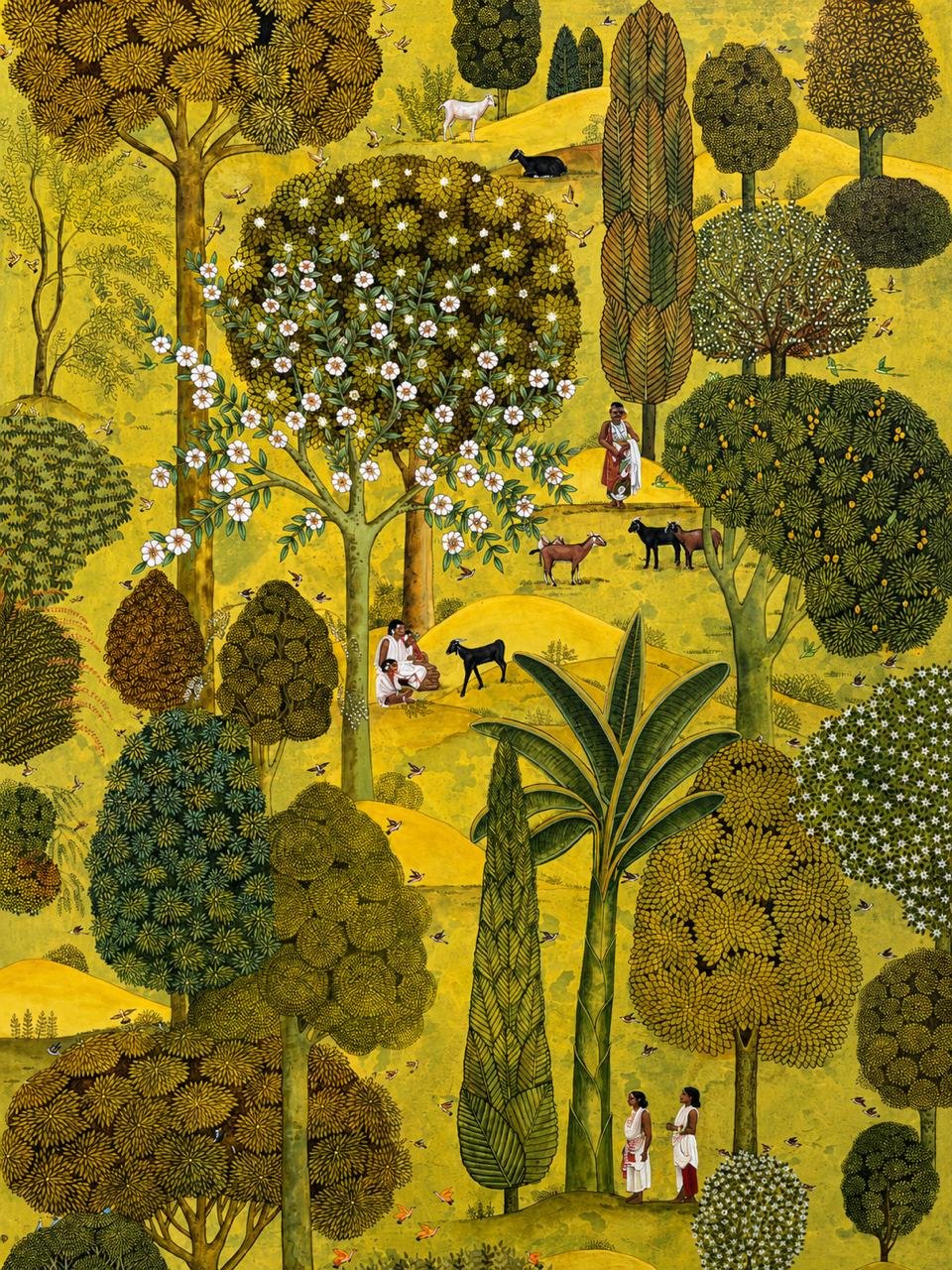
Her recurring interest in the Niyamgiri landscape, including the triangular forms associated with its hills, demonstrates how geography can be transformed into visual symbolism.
The mountain becomes more than a physical object. It can represent stability, cultural identity, sacred geography and continuity.
Traditional Knowledge in Contemporary Contexts
Traditional knowledge is another important component of cultural memory.
Majhi’s academic background in Traditional Art and her later contemporary practice demonstrate an ongoing relationship between inherited knowledge and modern artistic experimentation.
Her exploration of natural pigments is one example.
Materials such as turmeric, charcoal, chalk stone, geru soil and brown stone have connections with the natural environment and traditional material practices. When such materials are used within contemporary art, they carry both physical and cultural associations.
The use of these materials allows traditional knowledge to enter a contemporary artistic context without being treated simply as a historical artifact.
Memory and Modernization
Modernization can create opportunities while also changing cultural environments.
New infrastructure, expanding cities, changing occupations and technological development can influence how communities live and interact.
For an artist interested in cultural memory, these developments raise important questions.
What happens to traditional knowledge when everyday practices change? How does a community maintain cultural identity while adapting to new circumstances? Can visual art preserve aspects of experience that might otherwise become less visible?
Majhi’s practice does not necessarily provide simple answers to these questions. Instead, it creates visual spaces in which such tensions can be considered.
Art as a Bridge Between Generations
Cultural memory is particularly important when thinking about generations.
Older generations may carry memories of places and practices that younger people experience differently. Art can create opportunities for these perspectives to meet.
Majhi’s work with children provides an example of this intergenerational dimension.
Through art education and workshops, she has encouraged children to draw from observation, memory and personal experience. Subjects such as household activities, village journeys, festivals, trees, animals and everyday experiences become sources of artistic expression.
This approach encourages young people to recognise the cultural and personal value of their own experiences.
The Role of Public Art
Public art can also contribute to cultural memory because it becomes part of shared environments.
Unlike artworks that remain inside private collections or galleries, murals and public interventions are encountered by many people over time.
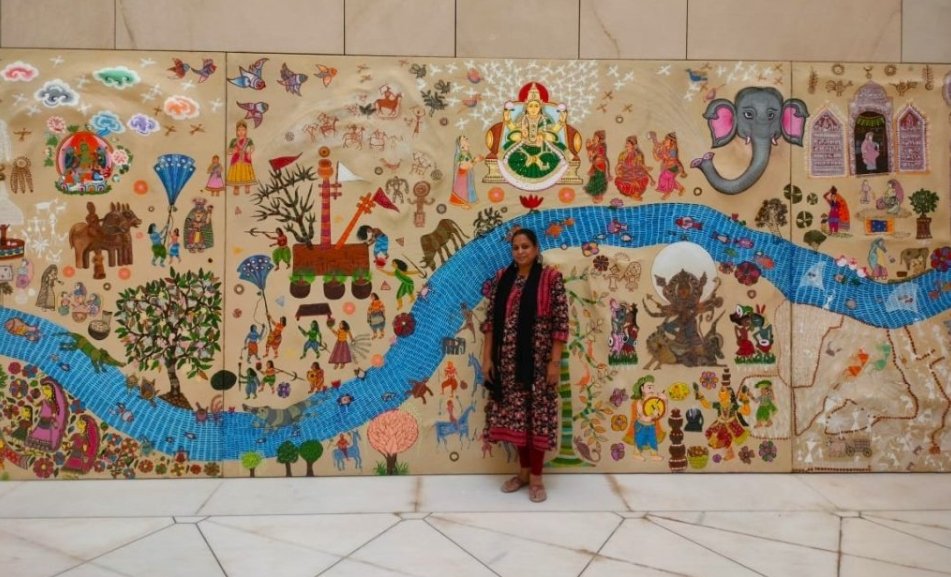
Majhi’s involvement in public-art projects in Odisha creates opportunities for visual ideas to become part of neighbourhoods and public spaces.
A public artwork can become associated with a particular location. Over time, it may itself become part of the memory of that place.
This creates a relationship between artistic production and collective memory.
Community Participation and Shared Memory
Majhi’s community-based approach further strengthens the connection between art and memory.
When communities participate in artistic activities, their experiences can become part of the creative process.
This can produce a different kind of artwork—one that reflects not only the artist’s interpretation but also the knowledge and perspectives of participants.
Her work with rural, tribal and urban communities demonstrates an interest in this participatory approach.
Community engagement allows memory to be understood as something collective rather than purely individual.
From Memory to Contemporary Expression
One of the most interesting aspects of Majhi’s practice is the transformation of cultural memory into contemporary artistic expression.
She does not simply reproduce traditional images or document cultural practices.
Instead, she interprets them through modern artistic forms, materials and contexts.
Painting, installation, photography, mixed media and public art provide different ways of translating memories into new visual experiences.
This process keeps cultural references active rather than static.
Cultural Identity Without Isolation
Majhi’s work also demonstrates that cultural identity does not have to mean isolation from contemporary life.
An artist can remain connected to regional traditions while participating in national and international artistic platforms.
Her exhibitions, residencies, public-art projects and collaborative initiatives have allowed her to take experiences rooted in Odisha into wider artistic contexts.
This creates an important balance.
Local cultural knowledge provides depth and identity, while contemporary platforms provide opportunities for dialogue with broader audiences.
Remembering While Moving Forward
Cultural memory is not necessarily about looking backward.
It can also help people understand the present and imagine the future.
By exploring traditional knowledge, environmental relationships, indigenous visual culture and urban transformation, Majhi’s work demonstrates how memory can remain relevant in contemporary life.
The past becomes a source for reflection rather than a boundary.
This approach is particularly valuable in a rapidly changing society where cultural traditions may need new forms of expression to remain visible.
Conclusion
Satyabhama Majhi’s artistic engagement with cultural memory reflects a wider concern with how people, places and traditions change over time.
Her work connects the urban environment of Bhubaneswar with the cultural and ecological landscape of Niyamgiri. It brings together traditional knowledge, natural materials, indigenous visual culture, community experience and contemporary artistic forms.
Through painting, public art, multidisciplinary practice and community engagement, she explores how memories can survive, evolve and acquire new meanings.
Her work suggests that cultural memory is not simply something inherited from the past. It is continuously recreated through the ways people understand their surroundings, maintain traditions, respond to change and tell their stories.
In this sense, Satyabhama Majhi’s art becomes part of an ongoing conversation between past and present. Her practice demonstrates how contemporary Indian art can engage with cultural identity while remaining open to experimentation, change and new forms of expression.